

Dec 17, 2025 Michael Dannhauer
ShareProcesses determine day-to-day operations, including goods receipt, production control, and invoice verification. However, the reality of these processes often remains hidden. Process mining changes that. The technology reveals how processes work and where they go off track.
We spoke with Miriam Wagner, an AI and process mining expert at INFORM. She explains the basics and benefits of research approaches and shows why, at INFORM, process mining means combining process analysis, optimization, and decision intelligence.
About Miriam Wagner
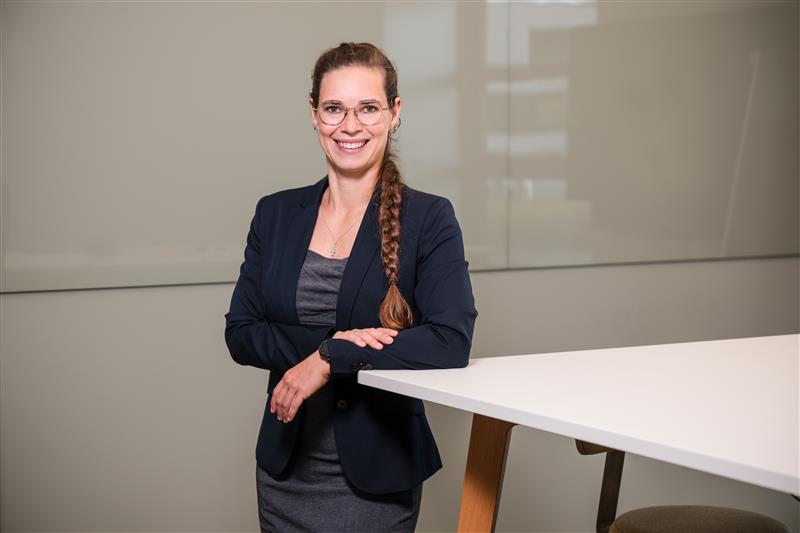
Miriam Wagner is an expert in process mining and artificial intelligence at INFORM. She focuses on analyzing real process data and how companies can use these insights to make informed decisions about process optimization. In her work, she combines scientific questions with practical applications from areas such as logistics, production, and supply chain management.
Interview
Question: Ms. Wagner, if you had to explain what process mining is to someone who has never heard of it, how would you describe it?
Answer: Process mining is like an X-ray for business processes. We examine a company's processes and see what is really happening. It uses data that is already available in IT systems, known as event logs. These logs show when a process was started, processed, or completed. This creates a realistic picture of the process, allowing companies to see where processes are running smoothly and where bottlenecks, loops, or unnecessary waiting times occur.
Question: Process mining takes an in-depth look at how companies operate. How did this technology come about?
Answer: Before it became a separate field of research, the goal was simple: to make processes visible as they actually happen, based on facts rather than perceptions. For instance, if someone believes that production planning is running smoothly, that perception may change when the data reveals overlapping work steps or incorrectly timed resources.
The roots of process mining lie in research at Eindhoven University of Technology. There, Dutch computer scientist Wil van der Aalst, one of the fathers of process mining, coined the term in the early 2000s.
Previously, process data was collected manually. Students walked through factories with clipboards and questionnaires. They asked employees about their work steps and transferred the results to Excel. This process was time-consuming, subjective, and prone to error. It only provided a snapshot of what was actually happening. Today, this is done automatically and on a large scale.
Question: In what ways can process mining be applied to different industries? Which areas of application are particularly exciting today?
Answer: The method works wherever digital traces are created, such as in production, finance, administration, and healthcare. For example, I know of hospitals that have used process mining to reduce transport times between departments and government agencies that have halved their processing times by identifying bottlenecks. The key is having the courage to examine your own processes.
Question: When companies want to understand their processes, they often use classic business intelligence systems that consolidate and visualize key figures. So, what is the difference between these applications?
Answer: Business intelligence (BI) shows numbers, such as how many orders have been completed. Process mining shows paths, i.e., how these orders run through the system. While BI shows what happens, process mining explains how and why. This makes it possible to identify where things come to a standstill or deviate from the planned sequence in the process.
One example is the OCEL standard, which is an internationally recognized data standard in process mining. OCEL describes how events and objects are linked so that complex processes in different systems can be compared and traced. In car manufacturing, for instance, customer orders, components, and machine processes run in parallel. OCEL reveals these relationships and makes them understandable.
Question: What are the practical benefits? Is measurable success actually achievable?
Answer: Yes, absolutely. The economic benefit comes from transparency. Companies can see exactly where time is being lost or rework is occurring. For instance, late payments can be detected in invoice verification before they become costly. In logistics, the data helps reduce downtime and shorten throughput times. However, numbers alone are not an end in themselves. Value is created when companies translate findings into action by rescheduling work steps, defining responsibilities more clearly, or introducing automated checks to avoid errors.
Question: Today, many companies rely on artificial intelligence. What role does AI play in process mining?
Answer: A very big one. Process mining is a data-driven process and part of the AI family. We use machine learning to recognize patterns. The software automatically recognizes similar processes and combines them into variants. For example, it recognizes when a production process contains additional inspection steps or when an approval process takes longer because more approvals are required. These different paths through the same process can then be compared.
Question: How can we methodically describe what happens in the background?
Answer: From a methodological perspective, process mining essentially consists of three classic disciplines: process discovery describes the mapping of real processes, conformance checking describes the comparison of target and actual values, and enhancement describes the addition of performance data. The process model is supplemented with information such as runtimes, costs, and resource utilization. This makes it possible to identify areas of particular efficiency and where bottlenecks or waiting times accumulate. These three steps form the basis of any modern process mining analysis.
Question: What other AI technologies are emerging today, and how are they changing applications?
Answer: In addition to machine learning, language models are playing an increasingly important role. These models enable new ways of interacting with systems that monitor and analyze processes — almost as if you were talking to a colleague.
At INFORM, for instance, we aim to allow production managers to ask our software via voice input: "Show me all orders that have been stuck in post-processing for more than ten days." The system automatically translates the question into code, calls up the appropriate process mining algorithms, and communicates with ERP, MES, or data warehouse systems in the background. The results appear as an understandable answer or visualization. This approach, "Ask Your Process," significantly lowers the barrier to entry for non-experts.
The process mining community at processmining.org is working hard to further develop these types of approaches.
Question: How does INFORM use process mining, and what exactly happens at your company?
Answer: At INFORM, we see process mining as a starting point for what we call "Process AI": the combination of process analysis, optimization, and decision intelligence. Our primary goal is to understand processes and incorporate the insights gained directly into operational systems.
Our optimization systems plan and control processes in real time, helping companies make better decisions. Process mining provides the basis for this by showing where potential lies and how adjustments affect the process.
These insights directly inform our research work. Together with RWTH Aachen University and other partners, we are testing new approaches to implement them. This allows us to gradually lay the foundation for an integrated Process AI strategy, as well as the next leap forward in the development of intelligently networked decision support.
Question: Many process mining research projects are based on real company data. How willing are companies to share this data, and what challenges does this pose?
Answer: Companies are often cautious about providing real process data for research purposes, usually due to concerns about data protection or revealing competitive information. Therefore, we initially rely on internal test data and pilot projects before analyzing real customer data. We anonymize and securely process data to combine scientific findings with practical benefits.
Question: Based on the current status and direction, where is process mining heading? Which technological or strategic developments do you consider particularly crucial?
Answer: A lot is happening at the moment. One trend is object-centric process mining, in which several objects are analyzed simultaneously. It's like a 3D view: instead of looking at a process linearly, you can see how different elements — machines, products, orders, or employees — are linked and influence each other. This reveals connections that would otherwise remain hidden.
Another trend is streaming process mining, or real-time analysis. This allows you to respond to deviations as they happen. I think the development toward action-oriented process mining is particularly important—systems that analyze and make suggestions about what to do. This directly addresses INFORM's mission of developing systems that derive recommendations for action from analysis, paving the way for process AI. This topic has been discussed extensively at conferences such as ICPM 2025.
Question: Finally, how would you briefly explain to a company why it needs process mining?
Answer: Because no company can improve without understanding how it operates. However, transparency is not an end in itself. Rather, it is the beginning of productive change. We want to help companies translate transparency into intelligent decision-making so they can actively shape their processes.
INFOBOX: How INFORM tests process mining in real processes
- In aviation, INFORM examines the use of process mining in turnaround management. This involves coordinating all processes related to aircraft handling, from catering to when a special vehicle pushes the aircraft back from the gate so it can taxi to the runway. INFORM analyzes how process data can be used in real time to identify delays early on and coordinate resources more effectively.
- Another research project deals with analyzing human intervention in automated processes. Here, INFORM is investigating when such interventions occur and whether they improve or worsen the results. The team is using the PMTK toolkit, a platform for process analysis, to accomplish this.
- INFORM is working with pilot applications in automotive logistics. The movements of finished vehicles on large factory premises are recorded and analyzed in real time, such as the movement between production, temporary storage, and loading. If a vehicle deviates from its planned route, stops for too long, or is parked incorrectly, the system automatically triggers a smart alert. This allows employees to intervene immediately and ensure that the vehicles are transported smoothly.
About our Expert

Michael Dannhauer
Michael Dannhauer has been working in corporate marketing at INFORM since 2002 and deals with topics related to the optimization of business processes using AI.